
Details you mustn’t miss at Florence Cathedral
Some cities are remembered for their streets, others for their cuisine, others for their history and others for their art, but Florence leaves a lasting impression thanks to all of these. Among its historical and artistic heritage, the Cathedral of Santa Maria del Fiore is the icon of the Tuscan capital. If you’re not familiar with it, today we’ll be sharing the details of Florence’s Duomo that you need to know.
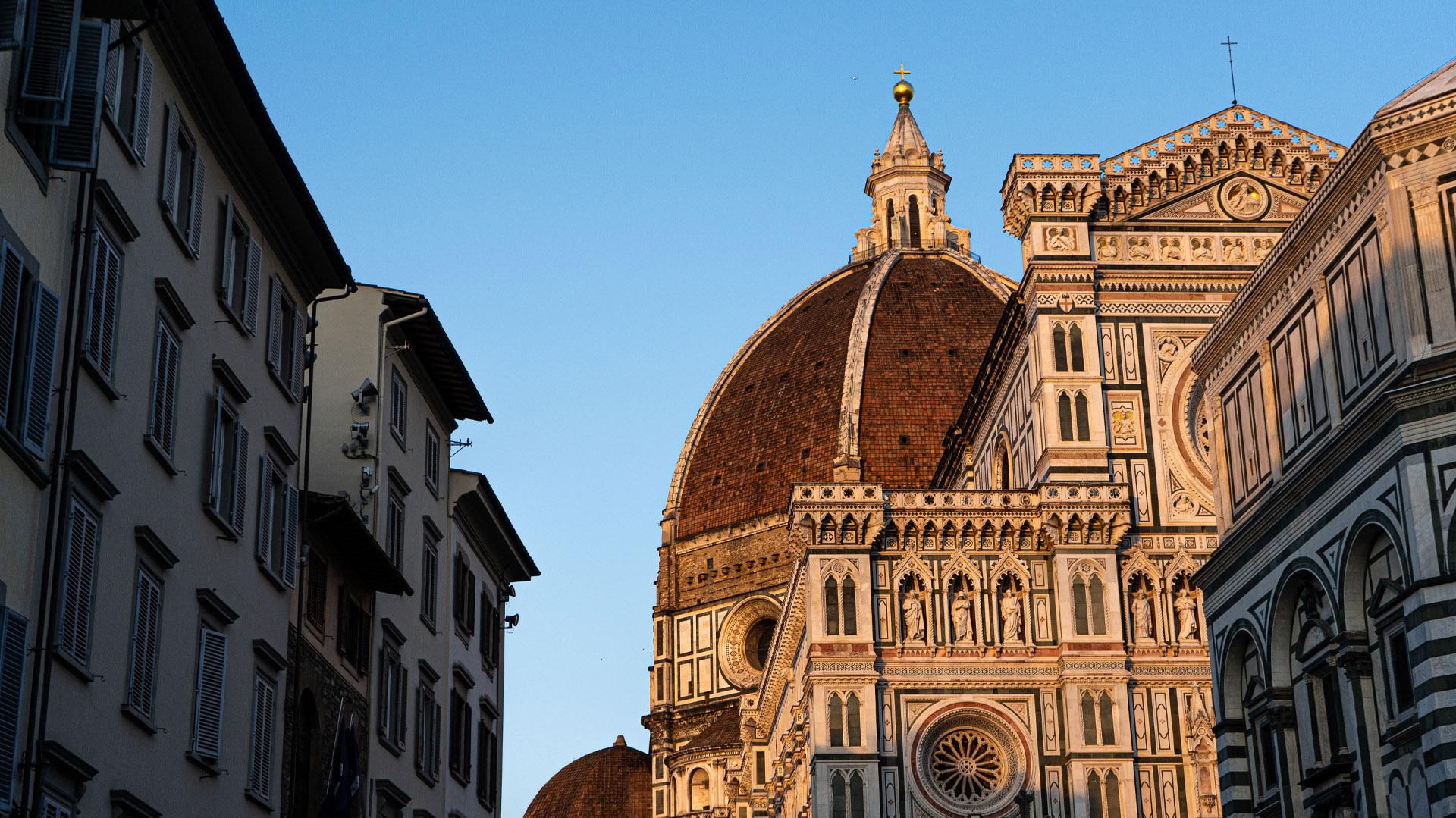
What should you see at Florence Cathedral? Details you need to know
Some cities are remembered for their streets, others for their cuisine, others for their history and others for their art, but Florence stays etched in your memory thanks to all of these. As part of its historical and artistic heritage, the Cathedral of Santa Maria del Fiore is the icon of the Tuscan capital. If you’re not familiar with it, today we’ll be highlighting the details of Florence’s Duomo that you need to know.
Discover the details of Florence Cathedral
When you see it for the first time as you enter Piazza del Duomo, its grandeur can be overwhelming, but if you take the tour with an audio guide or accompanied by an expert guide, you’ll discover that Every corner of the Duomo has a story to tell. To help you prepare for your trip to Florence, here are some of the details you simply mustn’t miss.
The marble façade is not the original one
One of the most common misconceptions is to think that the current façade of Florence Cathedral dates from the same period as its construction. Construction of the cathedral began in 1296 based on a design by Arnolfo di Cambio, but the current façade was completed much later, between 1871 and 1887, in the Neo-Gothic style, by Emilio De Fabris.
For centuries, the original façade remained unfinished. In fact, it was removed in the 16th century, leaving the cathedral with a bare façade until the final design was chosen in the 19th century following a public competition. The result is a harmonious blend of marble white, green and red, colours that can also be seen in other buildings within the complex, such as the Baptistery and the Campanile.
This contrast between the ancient and the relatively modern gives the Duomo a coherent, albeit historically fragmented, appearance that symbolises the evolution of Florentine art over the centuries.
Dimensions of Brunelleschi’s Dome
If there’s one reason why Florence Cathedral is famous throughout the world, it’s because of its monumental dome. Designed by Filippo Brunelleschi and completed in 1436, it was the largest dome built in its time and it is still the largest brick dome in the world today.
The dome has a diameter of 45.5 metres and a total height from the cathedral floor to the lantern of approximately 114 metres. Its construction was a revolutionary technical challenge, as Brunelleschi designed a double self-supporting dome without the use of large wooden scaffolding which were normally used to support the structure whilst it was being built (known as scaffolding).
This engineering marvel marked a turning point in Renaissance architecture. Climbing its 463 steps even the lantern tower is an experience in itself, allowing you to observe the structure up close, as well as offering unrivalled views of Florence.
Frescoes of the Last Judgement
Inside the dome, one of the most beautiful features of Florence Cathedral awaits us, whilst also being one of the most impressive works of sacred art: the frescoes of the Last Judgement, a monumental painting of 3,600 square metres built between 1572 and 1579 by Giorgio Vasari and Federico Zuccari.
The frescoes are named after the scenes they depict: angels, saints, sinners, demons and Christ himself, acting as judge, appear in the centre. It’s almost impossible to overlook it despite the sheer scale of the space, but taking the time to observe and understand what is depicted is well worth it. Furthermore, its Mannerist style marks the transition from the Renaissance to the Baroque, with the figures conveying great emotional intensity and theatricality.
Stained-glass windows of the Cathedral of Santa Maria del Fiore
The stained-glass windows are one of those details of Florence Cathedral that you simply must appreciate. There are 44 windows adorned with stained-glass windows dating mainly from the 15th century. Most were designed by some of the Quattrocento’s most renowned artists, including Donatello, Lorenzo Ghiberti and Paolo Uccello.
These stained-glass windows, of great artistic value, depict, naturally, religious scenes from both the Old and New Testaments. The way the light passes through the coloured glass creates an atmosphere that changes throughout the day.
Paolo Uccello’s liturgical clock
One fascinating detail that goes unnoticed by many visitors is the liturgical clock situated above the main inner door. This clock was painted by Paolo Uccello in 1443 and It follows the ancient Italian 24-hour system, where the day begins at sunset, not at midnight.
The most curious thing is that the The clock still works using that system and its spires rotate in the opposite direction to the current one. As well as its technical merit, it is a work of art decorated with the four evangelists, demonstrating how time in the Renaissance had a sacred dimension.
The Campanile and the Baptistery
Although they are not strictly speaking inside the Duomo itself, one cannot talk about it without mentioning the Giotto’s Campanile and the Baptistery of St John. Although they are separate structures, they form part of the cathedral’s architectural and spiritual whole.
The Campanile, standing 85 metres tall with 414 steps, offers a different perspective of the city and the Duomo, and its marble decoration follows the same pattern as the cathedral’s façade. The Baptistery, for its part, is one of the oldest buildings in Florence, and is famous for its Gates of Paradise designed by Ghiberti, as well as for its ceiling of golden mosaics.
But Santa Maria del Fiore has so much more to offer…
These are just a few details of Florence Cathedral – a veritable open book on the history of art, architecture and spirituality of the Renaissance. Every stone, every work of art and every detail holds a deeper meaning that enriches the visitor’s experience.
Visit Florence Cathedral with tickets tailored to your needs and let us be your guides so you don’t miss a single detail. Join us as we uncover its best-kept secrets.
Discover Florence Cathedral
View all experiences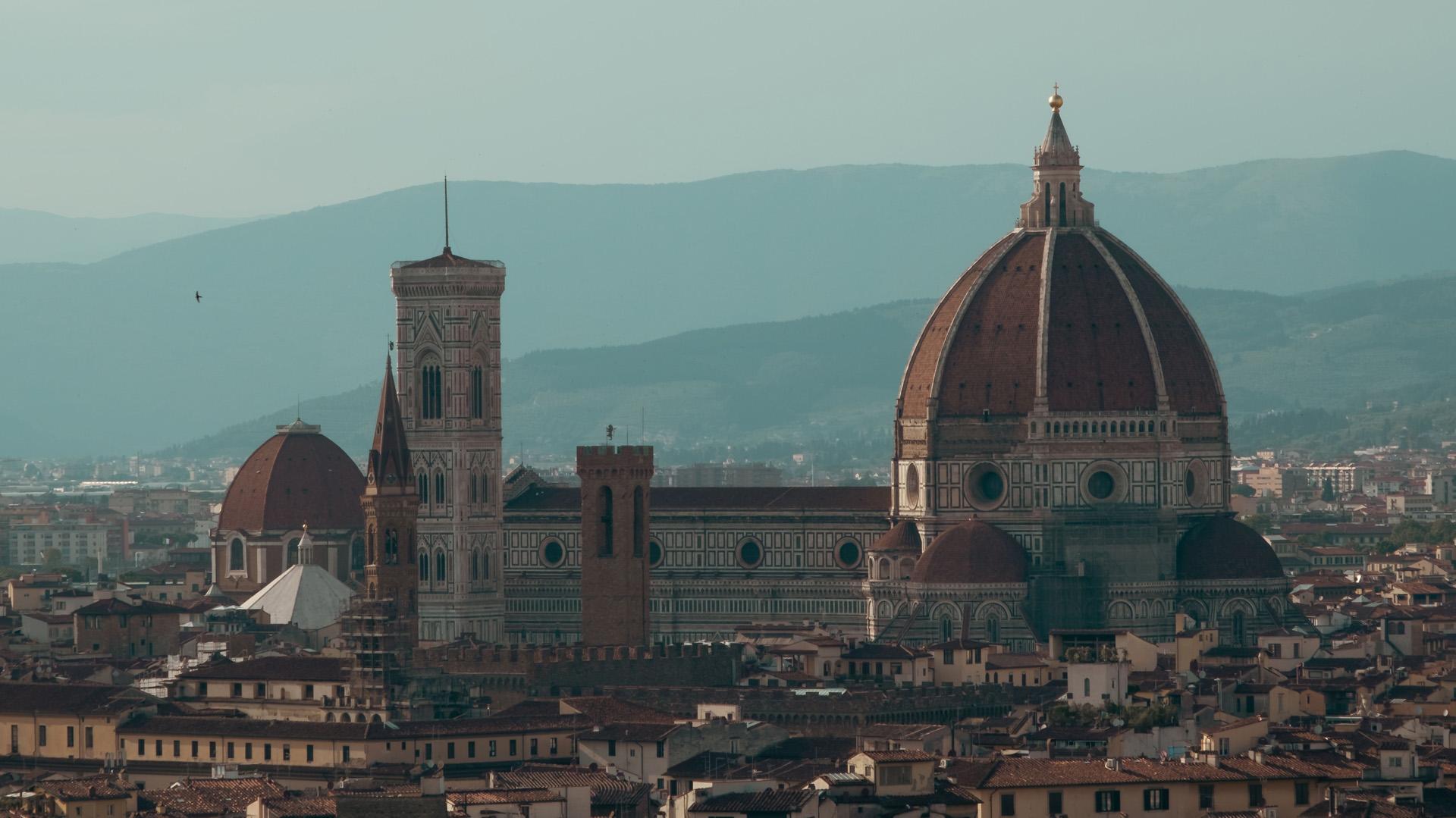
Uffizi Gallery and Duomo with Dome Combo
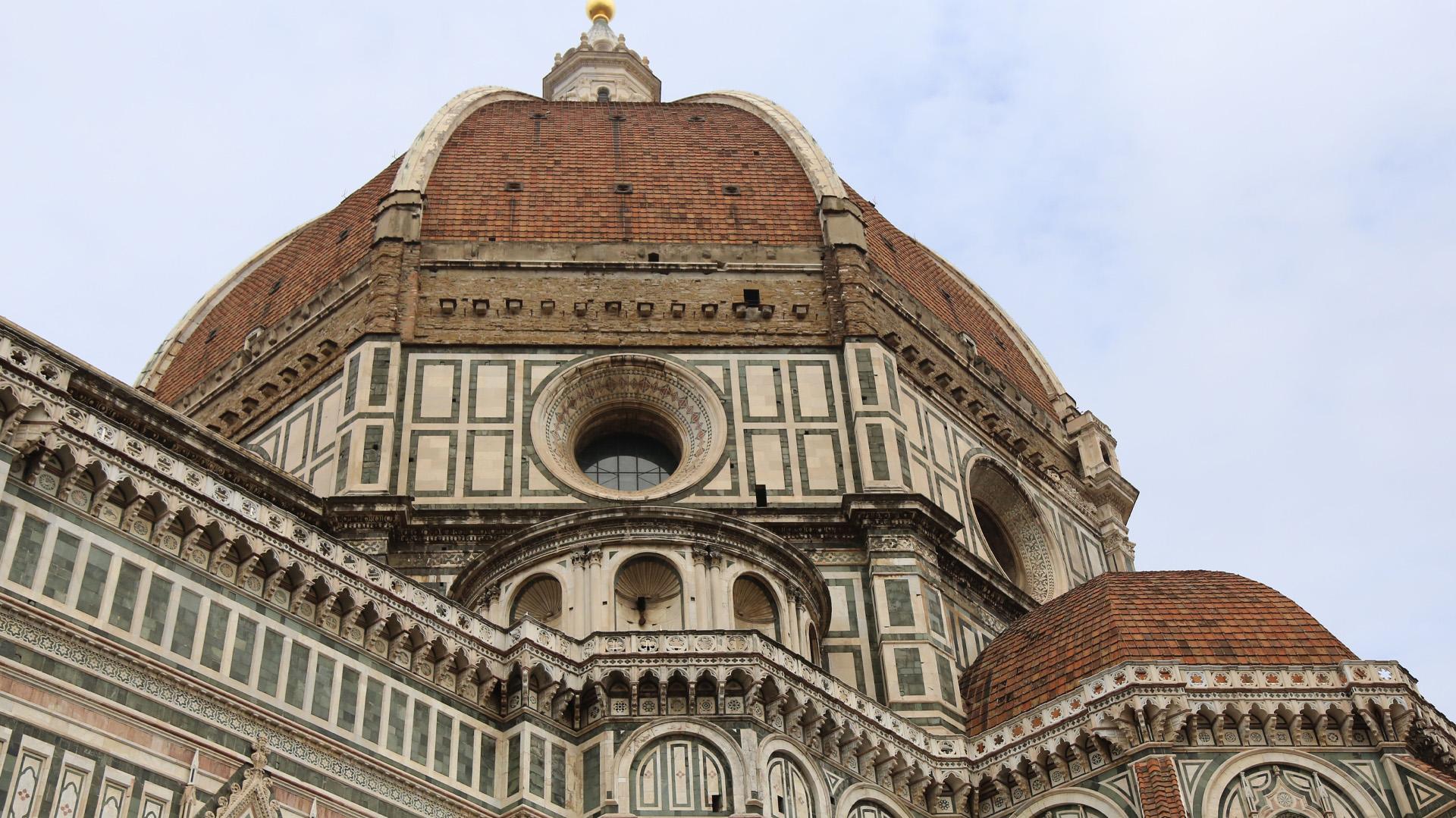
Guided tour inside Florence Cathedral
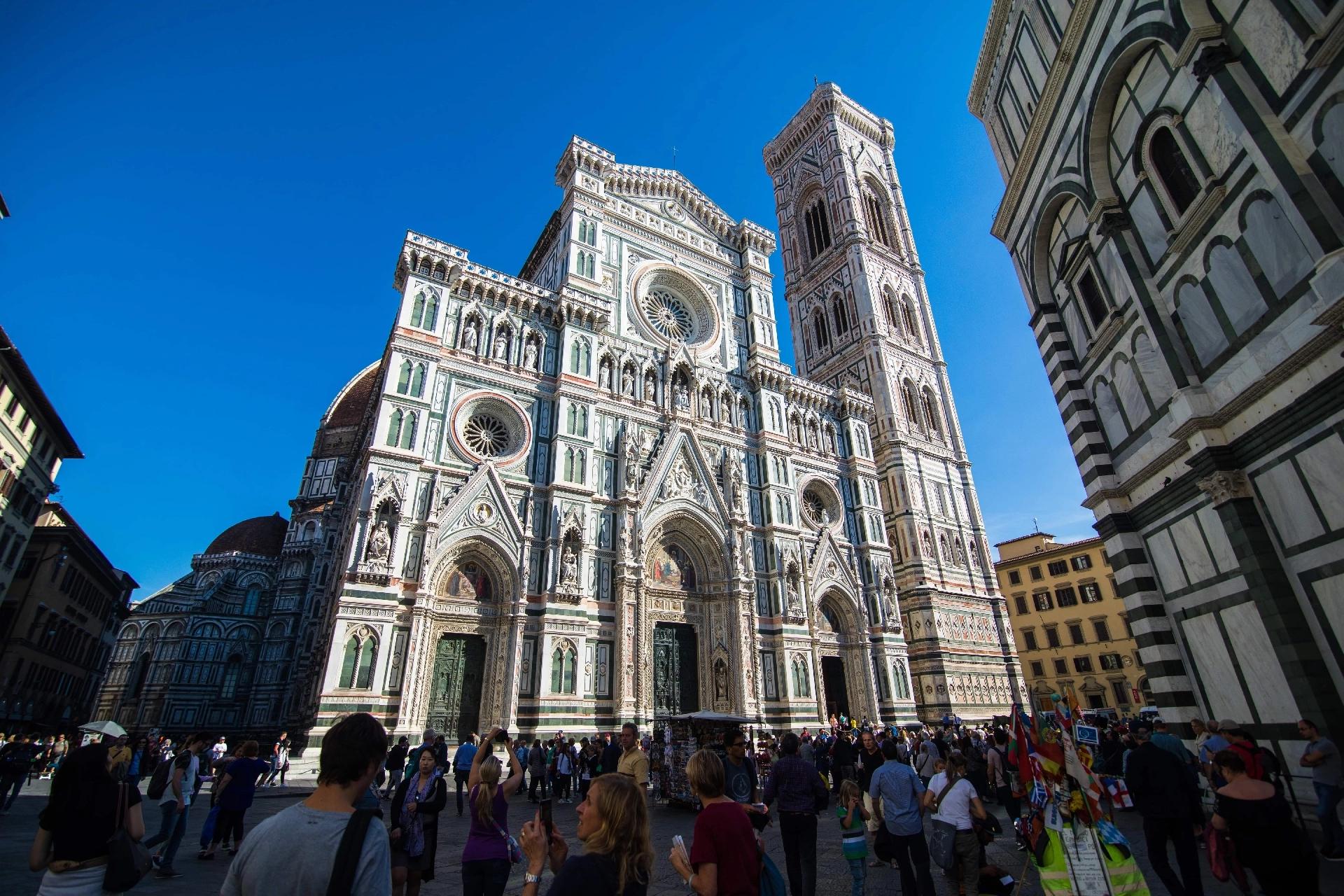
Guided tour of the dome of Florence Cathedral
Frequently Asked Questions
Once you’ve completed your purchase, you’ll receive a confirmation email with the details of your booking.
Tickets will be sent by email up to 24 hours before your visit or, if you book less than 24 hours in advance, up to 1 hour beforehand.
For guided tours, tickets may be collected directly at the meeting point. If you book a combined experience, you may receive tickets for each monument separately and at different times.
All visitors must present an original and valid identity document. The details must match those provided at the time of booking, as tickets are issued in the name of the holder.
Photocopies or digital copies of the document are not accepted. Minors must also carry their own identification and be accompanied by an adult.
No. Once the booking request has been made, it is not possible to change the name, date or time, nor to cancel the tickets. Nor are returns or refunds permitted for personal, medical, work-related or travel cancellation reasons.
These terms and conditions are displayed during the booking process and must be accepted before the booking is finalised.
The only exception is if the monument is closed. In that case, you will automatically receive a 100 per cent refund of the ticket price via the same payment method used for the purchase.
With us, you can check the latest availability for visiting this monument and book easily and securely. You’ll receive confirmation of your purchase once you’ve completed your booking, along with clear instructions and all the information you need to plan your visit with peace of mind.