
History of Brunelleschi’s Dome, Florence Cathedral
Brunelleschi’s Dome stands out against the Florence skyline, making it the city’s quintessential icon, but it is also one of the greatest achievements of Renaissance architecture. This masterpiece changed the course of European construction history, and to this day thousands of visitors continue to marvel at this part of Florence Cathedral, a symbol of human ingenuity, faith and art.
Brunelleschi’s Dome: discover the history of Florence Cathedral
Brunelleschi’s Dome stands out against the Florence skyline, making it the city’s quintessential icon, but it is also one of the greatest achievements of Renaissance architecture. This masterpiece changed the course of European construction history, and to this day thousands of travellers continue to marvel at this space within the Florence Cathedral, a symbol of human ingenuity, faith and art.
Key facts about Brunelleschi’s Dome
It took years to work out how to complete it
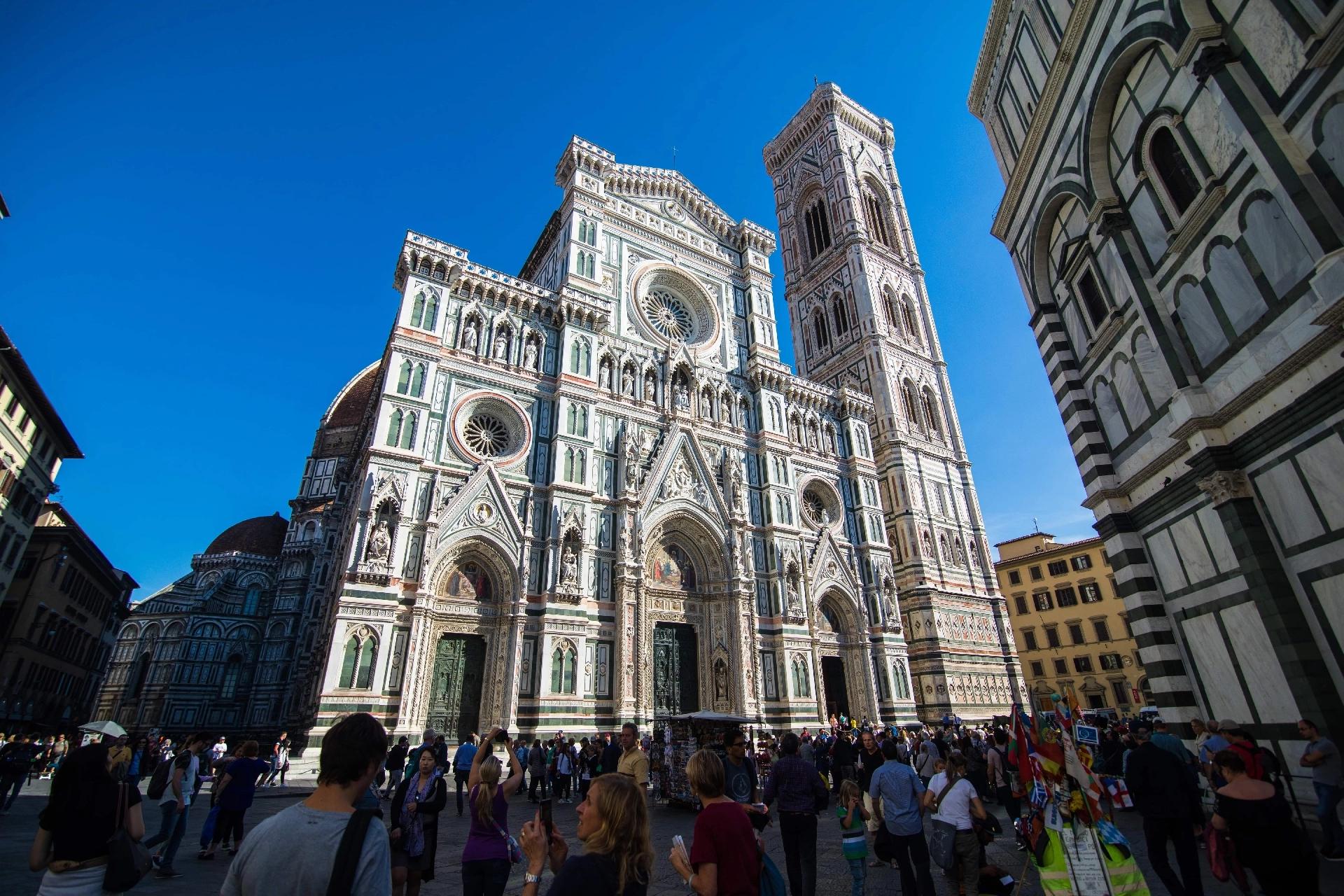
The construction of the Cathedral of Santa Maria del Fiore—the official name of the Duomo—began in 1296, but during the process they encountered a a major problem: the closure of the central nave’s drum. A competition was launched inviting architects to submit their proposals, but at that time there was no known method capable of spanning such a vast space without the use of columns or beams. Or so it seemed…
A goldsmith with no experience in architecture came up with a highly ingenious solution that seemed to solve this problem. And that person was Brunelleschi. How did he do it? We’ll tell you!
Self-supporting
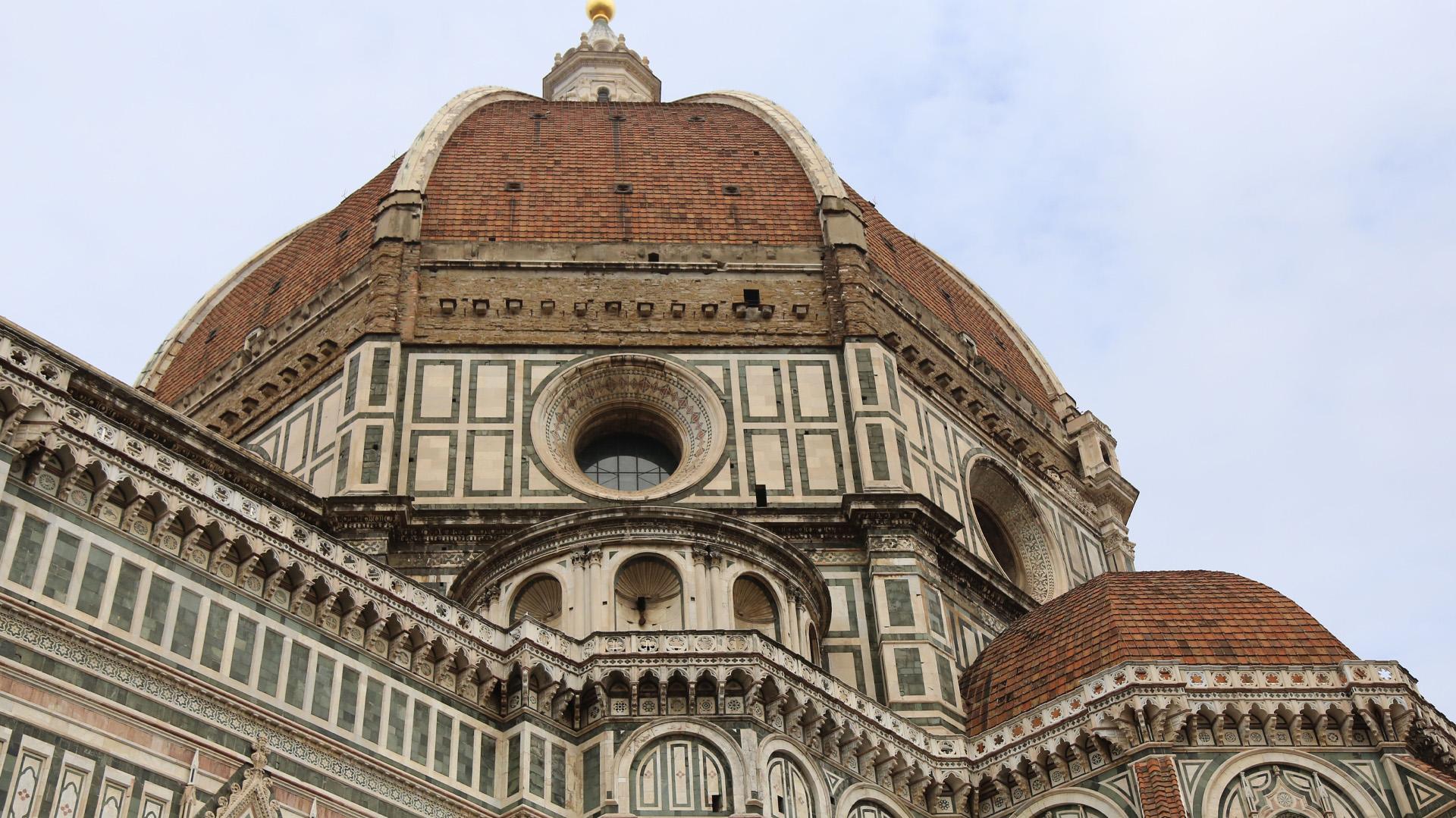
The dome of Florence is, first and foremost, a dome self-supporting, meaning that it required no scaffolding or temporary structures during its construction. This technique was not only unprecedented for the time, but extremely risky.
Brunelleschi designed a structure of double shell: an inner, heavier shell that bears the weight, and an outer, lighter shell, visible from the outside and designed to protect the structure. Both are connected by a complex network of beams and passageways.
This innovation made it possible to build the dome block by block without it collapsing, reaching a height of 114 metres and becoming the the largest masonry dome ever built.
Herringbone brickwork technique
One of the most surprising secrets of Brunelleschi’s Dome is what is known as herringbone brickwork technique. This method ensured that the bricks remained in place without slipping whilst the construction of the dome of Florence Cathedral was being completed.
Brunelleschi realised that by laying the bricks at an angle, in a staggered pattern and following a specific design, the load was distributed more evenly and there was no need to add supporting structures during construction. This method also provided lateral stability and prevented slippage, which was essential in a structure with such a steep slope.
Specific systems devised by Brunelleschi
Another of Brunelleschi’s great achievements was the invention of systems specially designed to hoist materials to the very top of the Florence dome. He used a system of pulleys, cranes and winches featuring designs never seen before, such as reversible gears that allowed materials to be raised and lowered without having to dismantle the machinery.
These innovations made it possible to hoist tonnes of stone and brick to heights never before reached in the city. Furthermore, it marked the beginning of a new era in architecture, influencing building techniques throughout Europe for centuries.
Inspiration from the classical world
Although revolutionary, Brunelleschi drew deep inspiration from the classical Roman architecture, particularly in the Pantheon of Agrippa. He travelled to Rome in his youth, where he spent years studying the ruins and building techniques of the Empire. However, what he achieved in Florence surpassed even his models: the Pantheon has a dome 43 metres in diameter, built with Roman concrete, whilst the one in Florence, of similar proportions, was constructed using brick and stone.
The frescoes in the dome
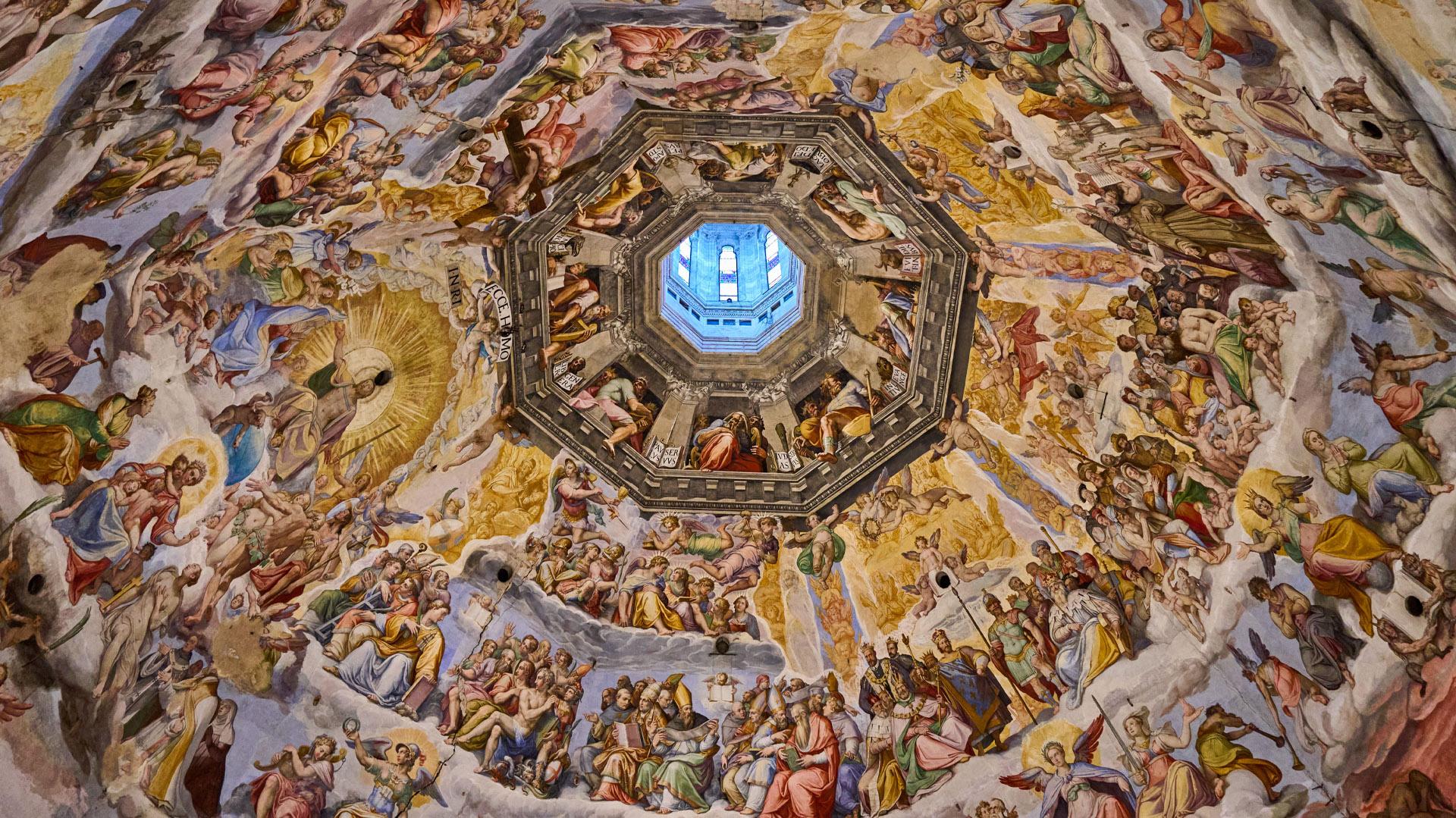
Once the structure of the Florence Dome was completed, its interior remained undecorated for over a century. It was in 1572 that the decision was taken to embellish this monumental space with a painting that would do it justice.
And who better to do this than one of the leading figures of the moment? Giorgio Vasari, the celebrated artist and architect, was chosen for this important task. He designed a monumental composition of the The Last Judgement, inspired by Michelangelo’s model in the Sistine Chapel. However, he did not live to complete the work, as he died in 1574, leaving only part of the fresco complete.
Following his death, the project was taken over by Federico Zuccari, a painter from Rome. He completed the frescoes following the general outline of Vasari’s original design, although he introduced some stylistic variations of his own.
Thus, the impressive dome is not merely the work of a single artist, but of two leading figures of the era, resulting in a complex a majestic structure covering more than 3,600 square metres and depicts a stunning and richly detailed vision of the Last Judgement.
Visiting Florence’s Duomo: an unmissable experience
Visiting Florence Cathedral and climbing Brunelleschi’s Dome is an unforgettable experience for any lover of history, architecture or art – but also for any traveller! From the top, you can enjoy unrivalled views of the whole city and the stunning Tuscan hills that surround it – a landscape straight out of a dream!
Discover the Florence Duomo with tickets that include an audio guide or guided tour, and explore this impressive monument. Understanding its history in detail and observing the techniques from the inside completely transforms your visit. Don’t miss this opportunity!
Discover Florence Cathedral
View all experiences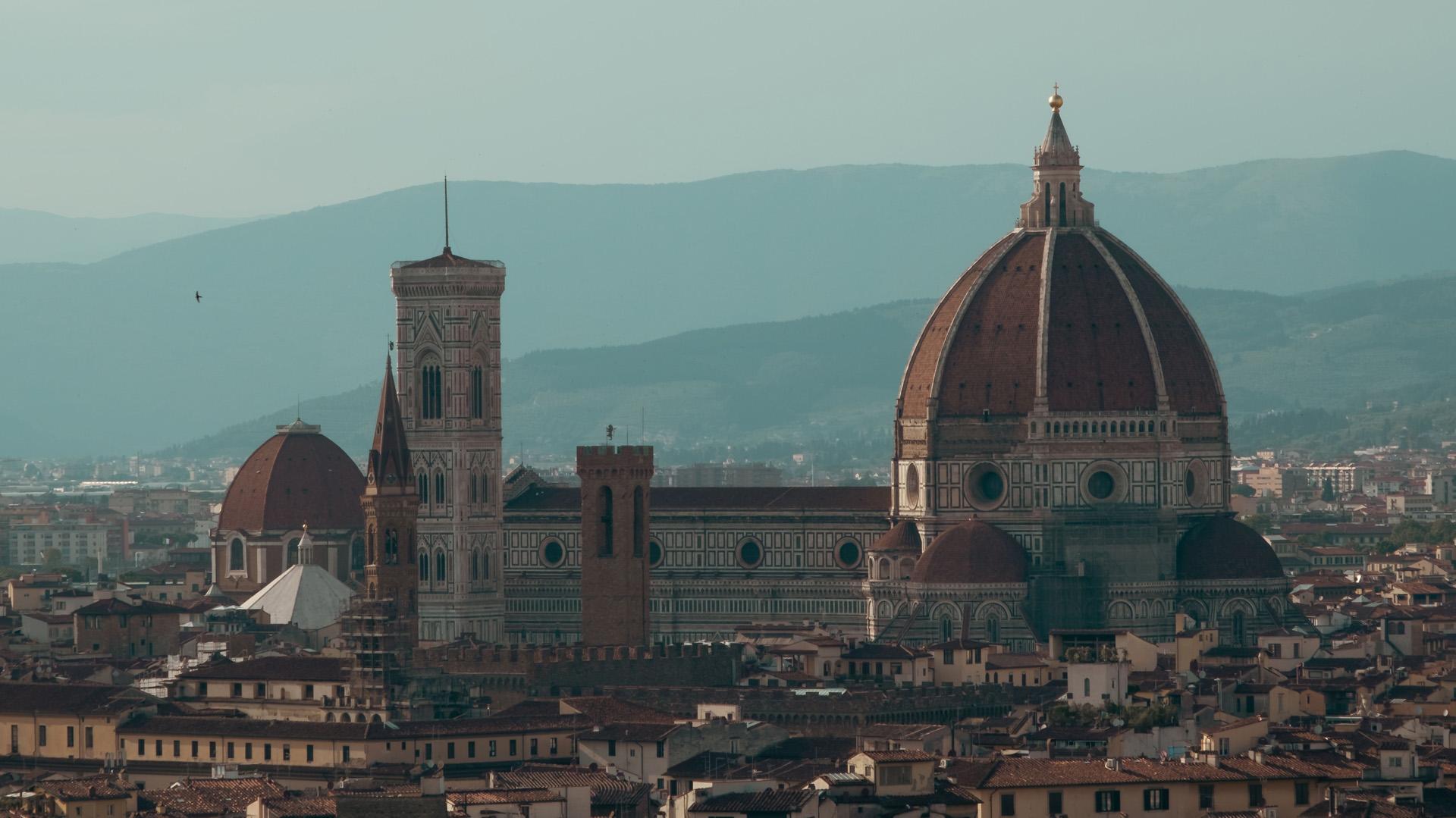
Uffizi Gallery and Duomo with Dome Combo
Guided tour inside Florence Cathedral
Guided tour of the dome of Florence Cathedral
Frequently Asked Questions
Once you’ve completed your purchase, you’ll receive a confirmation email with the details of your booking.
Tickets will be sent by email up to 24 hours before your visit or, if you book less than 24 hours in advance, up to 1 hour beforehand.
For guided tours, tickets may be collected directly at the meeting point. If you book a combined experience, you may receive tickets for each monument separately and at different times.
All visitors must present an original and valid identity document. The details must match those provided at the time of booking, as tickets are issued in the name of the holder.
Photocopies or digital copies of the document are not accepted. Minors must also carry their own identification and be accompanied by an adult.
No. Once the booking request has been made, it is not possible to change the name, date or time, nor to cancel the tickets. Nor are returns or refunds permitted for personal, medical, work-related or travel cancellation reasons.
These terms and conditions are displayed during the booking process and must be accepted before the booking is finalised.
The only exception is if the monument is closed. In that case, you will automatically receive a 100 per cent refund of the ticket price via the same payment method used for the purchase.
With us, you can check the latest availability for visiting this monument and book easily and securely. You’ll receive confirmation of your purchase once you’ve completed your booking, along with clear instructions and all the information you need to plan your visit with peace of mind.